Aerogel Walls represent a significant advancement in insulation technology. Dr. Emily Chen, a leading expert in materials science, states, “The efficiency of Aerogel Walls can revolutionize energy usage in buildings.” This innovative approach to insulation takes advantage of aerogel's unique properties. These walls offer remarkable thermal performance, reducing energy loss and improving thermal regulation.
Despite their advantages, the practicality of Aerogel Walls can pose challenges. The cost of aerogel materials remains higher than traditional insulation options. Additionally, installation can be complex and requires specialized techniques. These factors require careful consideration. However, the potential energy savings and environmental benefits make Aerogel Walls an important area for research and development.
As the demand for sustainable building practices grows, Aerogel Walls could play a pivotal role. Their lightweight nature and versatility can cater to various architectural designs. Finding a balance between cost, performance, and usability will be key. As Dr. Chen reminds us, “Innovation is a journey; it's not without its hurdles.”
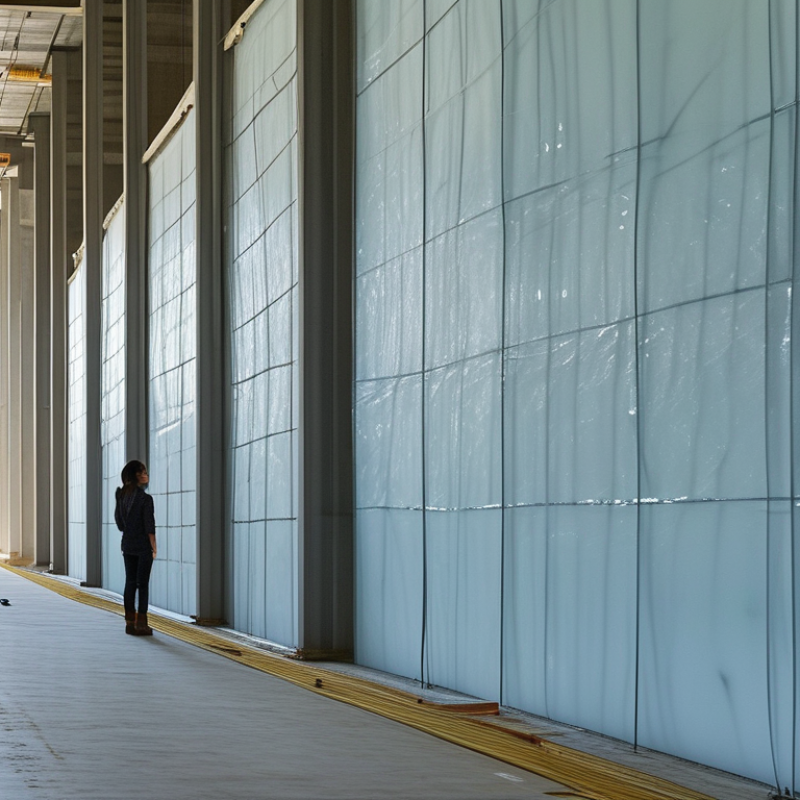
Definition and Composition of Aerogel Walls
Aerogel walls are an innovative advancement in insulation technology. They are composed primarily of silica, which gives them remarkable thermal properties. Silica aerogels can achieve thermal conductivity as low as 0.013 W/m·K. This makes them one of the most effective insulating materials available today. Such efficiency can significantly reduce energy consumption in buildings, cutting heating and cooling costs drastically.
In terms of composition, aerogels are overwhelmingly made of air, accounting for about 90-99% of their volume. The structure resembles a network of tiny silica particles, which traps air. This unique porosity leads to minimal heat transfer. According to industry reports, a study published by the American Society of Heating, Refrigerating and Air-Conditioning Engineers noted that buildings using aerogel walls can reduce energy demand by up to 30%.
Despite their advantages, the manufacturing process of aerogel can be complex and costly.
The lightweight nature of aerogel walls also contributes to their versatility in design. However, they are sometimes fragile and require careful handling. As the industry evolves, understanding the balance between cost and performance remains crucial. It’s vital for engineers and architects to stay informed about the latest developments to make informed decisions.
Properties of Aerogel that Enhance Insulation
Aerogels are exceptional materials known for their extreme lightness and unique insulating properties. Aerogel walls utilize this innovative material to achieve superb thermal insulation. The average thermal conductivity of aerogels is around 0.013 W/m·K, which is significantly lower than traditional insulation materials such as fiberglass or foam. This remarkable property helps in reducing energy consumption in buildings. A report from the U.S. Department of Energy highlights that buildings account for nearly 40% of total energy use, emphasizing the need for advanced insulation solutions.
The porous structure of aerogels contributes to their insulating effectiveness. Each aerogel has a network of pores, which traps air within, minimizing heat transfer. This feature not only enhances performance but also offers a much thinner profile compared to conventional materials. Reports indicate that aerogel insulation can be up to five times more effective than fiberglass. However, the cost of aerogel materials remains a concern. While their performance is outstanding, the economic viability is still an area that requires further exploration and innovation.
Applications in construction and aerospace show promise. With an increasing focus on sustainability, aerogels could play a pivotal role in energy-efficient designs. Yet, challenges such as fragility and manufacturing scalability persist. Constant improvements in aerogel technology and production methods are crucial for wider adoption. Investing in research could help break down existing barriers, making aerogel walls a staple in future insulation solutions.
What is an Aerogel Wall and Why is it Important for Insulation?
| Property |
Description |
Benefits for Insulation |
| Thermal Conductivity |
Extremely low thermal conductivity, often < 0.03 W/m·K. |
Reduces heat transfer, enhancing energy efficiency. |
| Lightweight |
One of the lightest solid materials, often less than 0.1 g/cm³. |
Easy to handle and install, reducing structural load. |
| Porosity |
High porosity, consisting of 90-95% air. |
Traps air, providing excellent insulating properties. |
| Fire Resistance |
Non-combustible and high thermal stability. |
Improves safety and longevity of building materials. |
| Moisture Resistance |
Hydrophobic properties that repel water. |
Prevents mold and degradation in insulation. |
Comparison of Aerogel Walls with Traditional Insulation Materials
Aerogel walls represent a remarkable advancement in insulation technology. They are significantly lighter than traditional materials. This lightweight feature makes aerogels easy to handle and install. Unlike fiberglass or foam insulations, which can be heavy and cumbersome, aerogels reduce the overall structural load. They offer a unique solution for applications where weight is critical, such as aerospace and portable structures.
The thermal efficiency of aerogel walls is superior to that of conventional materials. Aerogels have low thermal conductivity, meaning they effectively prevent heat transfer. In contrast, traditional insulation methods often fall short, allowing some heat loss. This performance gap can lead to increased energy costs and discomfort in buildings. While aerogels are more expensive, their long-term energy savings might justify the initial investment. Many still grapple with the high cost and lack of widespread availability, which poses challenges for broader adoption.
In real-world applications, using aerogel walls can sometimes reveal limitations. Installation requires specialized techniques to maximize performance. If not executed properly, their benefits may not be fully realized. Additionally, the environmental impact of aerogel production remains a topic of ongoing research. Thus, while aerogels showcase impressive properties, careful consideration is necessary to make the most informed insulation choices.
Applications of Aerogel Walls in Construction and Industry
Aerogel walls are innovative materials transforming construction and industry. Known for their incredibly low density and high insulation properties, aerogel walls serve as a game-changer. They provide effective thermal resistance, making them ideal for energy-efficient buildings. Additionally, aerogel is highly resistant to moisture, which benefits various industrial applications.
In construction, aerogel walls excel in areas like roofs and exterior walls. These spaces require superior insulation without significant weight. Aerogel walls allow for thinner designs while maintaining energy efficiency. Moreover, they contribute to sustainable building practices by reducing heat loss. Structures equipped with aerogel also tend to have lower energy bills.
Tips: When considering aerogel for insulation, think about long-term savings. Assess your specific needs before installation. For industrial applications, ensure you evaluate the environmental impact carefully. Such details make a substantial difference. However, be aware that installation can be complicated. Proper expertise is required to maximize aerogel benefits. Fundings are often needed for the initial investment too.
Emphasizing aerogel's durability hints at its long-term benefits. Over time, wear and tear can affect any material. Regular monitoring is essential to uphold performance standards. Observations and adjustments can lead to even better results with aerogel walls. Further exploration into their applications reveals vast potential in various fields.
Future Innovations and Challenges in Aerogel Technology
Aerogel technology is a fascinating field that holds promise for the future.
Aerogel walls offer unmatched insulation, but challenges remain. Research is ongoing to enhance its properties.
This includes increasing durability and production efficiency.
One significant challenge is the cost associated with aerogel production.
Currently, it is more expensive than traditional insulation materials. However, innovations in manufacturing processes could reduce these costs.
Researchers are exploring ways to mass-produce aerogels more efficiently.
This could lead to wider adoption in construction and other fields.
Another area of innovation is enhancing the thermal resistance of aerogels.
While current materials perform well, there's always room for improvement.
Finding new composite materials to mix with aerogel could open new doors.
As these advancements occur, aerogels might become a standard choice in energy-efficient buildings.
Taking these steps will require collaboration among scientists and engineers.
The future of aerogel technology appears bright, yet it is essential to remain mindful of these challenges.
FAQS
: Aerogel walls are primarily made of silica, with air making up 90-99% of their volume.
They have incredibly low thermal conductivity, as low as 0.013 W/m·K.
Aerogel walls are significantly lighter and more thermally efficient than conventional materials.
Yes, buildings with aerogel walls can reduce energy demand by up to 30%.
They are lightweight, making them easier to install, but they can be fragile.
Installation requires specialized techniques. Improper execution can lead to suboptimal performance.
The manufacturing process is intricate and can be costly, impacting overall feasibility.
While they are expensive, long-term energy savings may justify the initial investment.
The environmental impact of aerogel production is still being researched and evaluated.
Yes, staying informed about developments is crucial for making informed insulation choices.
Conclusion
Aerogel walls are a revolutionary insulation solution characterized by their lightweight composition and exceptional thermal properties. Composed primarily of silica, aerogel walls possess a porous structure that significantly reduces heat transfer, making them far more effective than traditional insulation materials. Their low density and high thermal resistance contribute to energy efficiency in various applications, ranging from residential buildings to industrial settings.
The advantages of aerogel walls extend beyond thermal insulation; they also offer superior soundproofing and moisture resistance. As construction and industry continue to evolve, the potential for aerogel technology is vast, with ongoing innovations aimed at enhancing performance and reducing costs. However, challenges remain, such as scalability and durability, which researchers are striving to address. Overall, aerogel walls represent a promising advancement in insulation technology, with the potential to transform energy efficiency in the built environment.

 JUTAO NEW MATERIAL